
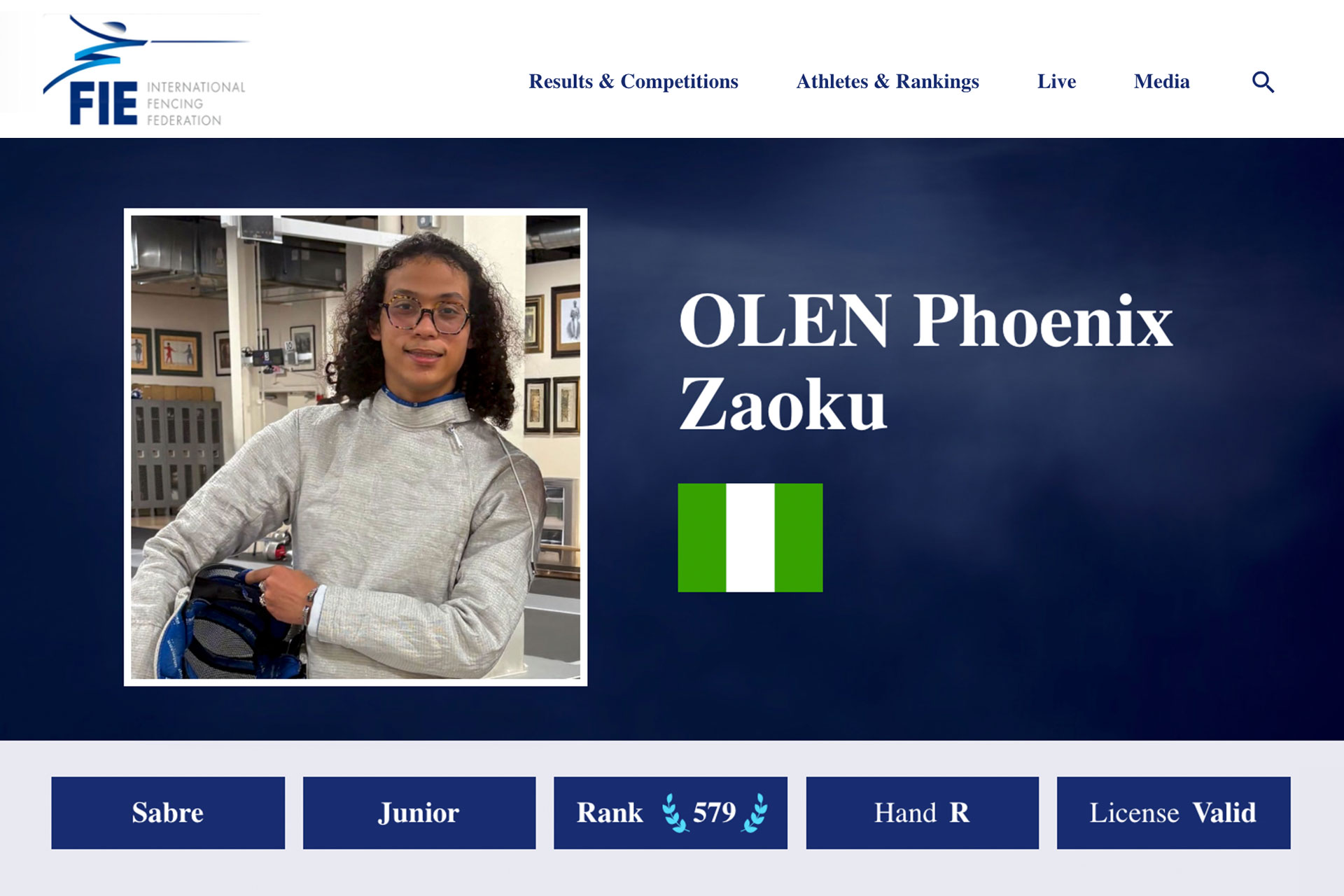
At a glance: Junior and Cadet World Championships, Rio de Janeiro, April 2026: Phoenix’s first international competition, fencing saber for Nigeria. It was a hard debut, and it earned his first world ranking (579th in junior men’s saber) and selection for Nigeria’s next events.
Junior and Cadet World Championships, Rio de Janeiro | Team Nigeria Saber
I thought I was ready for the world stage. I had trained for this moment, visualized it, talked about it with my coach for months. Then I stepped onto the strip and lost 5–0 in what felt like seconds, and I realized that thinking you are ready and actually being ready are two completely different things.
That was my introduction to the Junior and Cadet World Fencing Championships in Rio de Janeiro. I am 15 years old, I fence saber, and I represent Nigeria. This was supposed to be the tournament where I proved I belonged. Instead, it became the tournament that showed me exactly how far I have to go, and why I am more committed to this sport than I have ever been.
The Journey to Rio
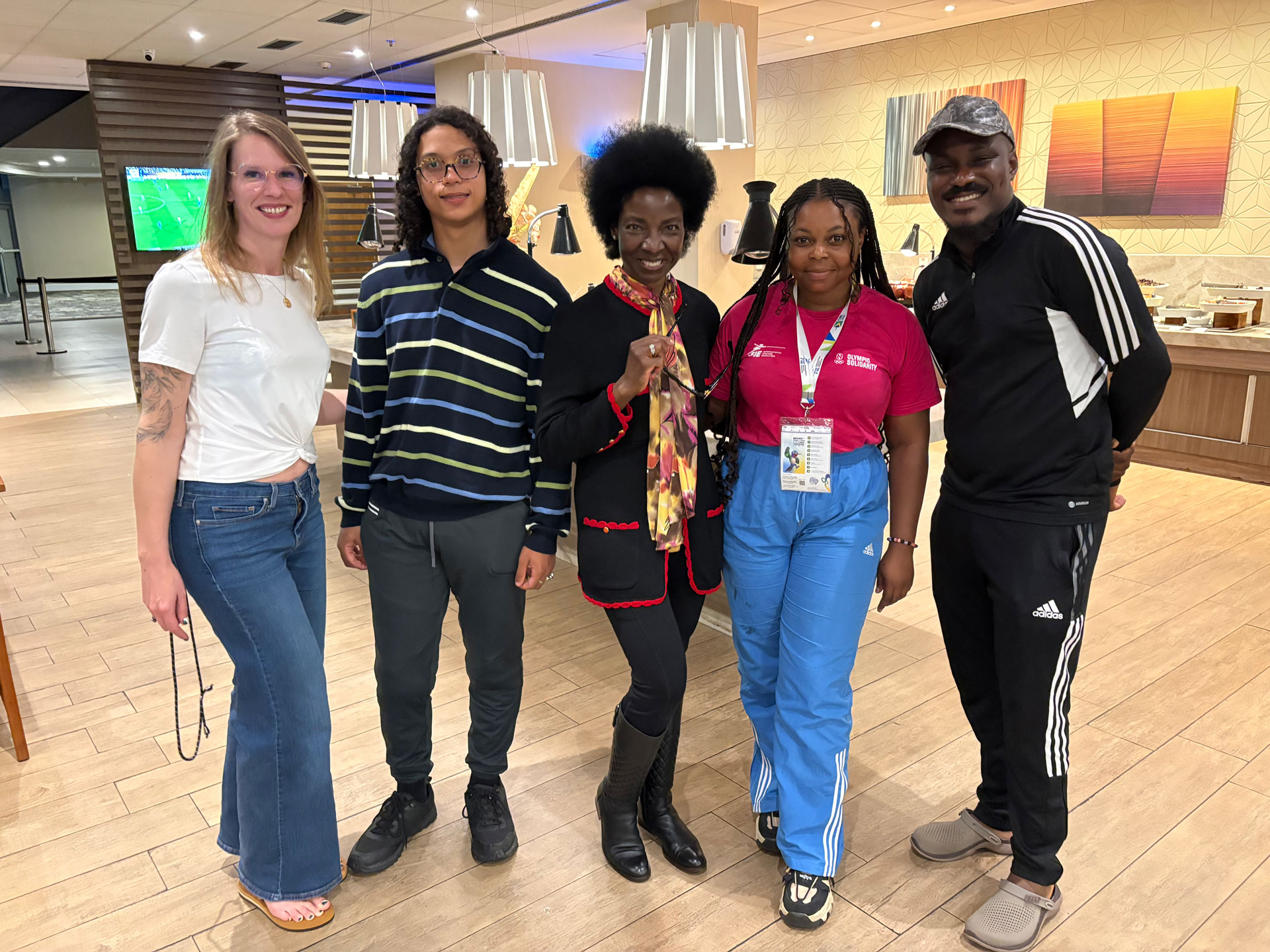
My mother, my coach Madison Fournier, and I traveled from Boston to Rio with a long layover in Miami. When we finally landed, we met Coach Alogba Ibrahim, head coach of the Nigerian Fencing Federation. He is one of the hardest-working people I have ever been around. The man radiates focus. Every conversation with him felt like a lesson in what it means to take this sport seriously at the international level.
We also met my teammate, who is ranked 10th in saber in Africa. That ranking matters, but what stood out even more was how he carried himself. There was a quiet confidence to everything he did, the way he warmed up, the way he spoke to officials, the way he treated every person in the venue with respect. I remember watching him and thinking, that is what this level looks like. He was hardly alone. Fencing seems to bring out the best in people. That is what I am building toward.
Before any fencing could happen, we went through accreditation. At international competitions, accreditation determines everything. Without it, you do not compete, you do not enter the venue, you do not exist as far as the tournament is concerned. Once we received our badges and passed weapons check, it finally felt real. I was not just a kid who fenced at a fencing club in New England. I was representing a country.
When It Hit Me
Practice began on March 30, and I felt good. My blade work was sharp, my footwork felt clean, and I was feeding off the energy of being in a world-class venue surrounded by the best young fencers on the planet.
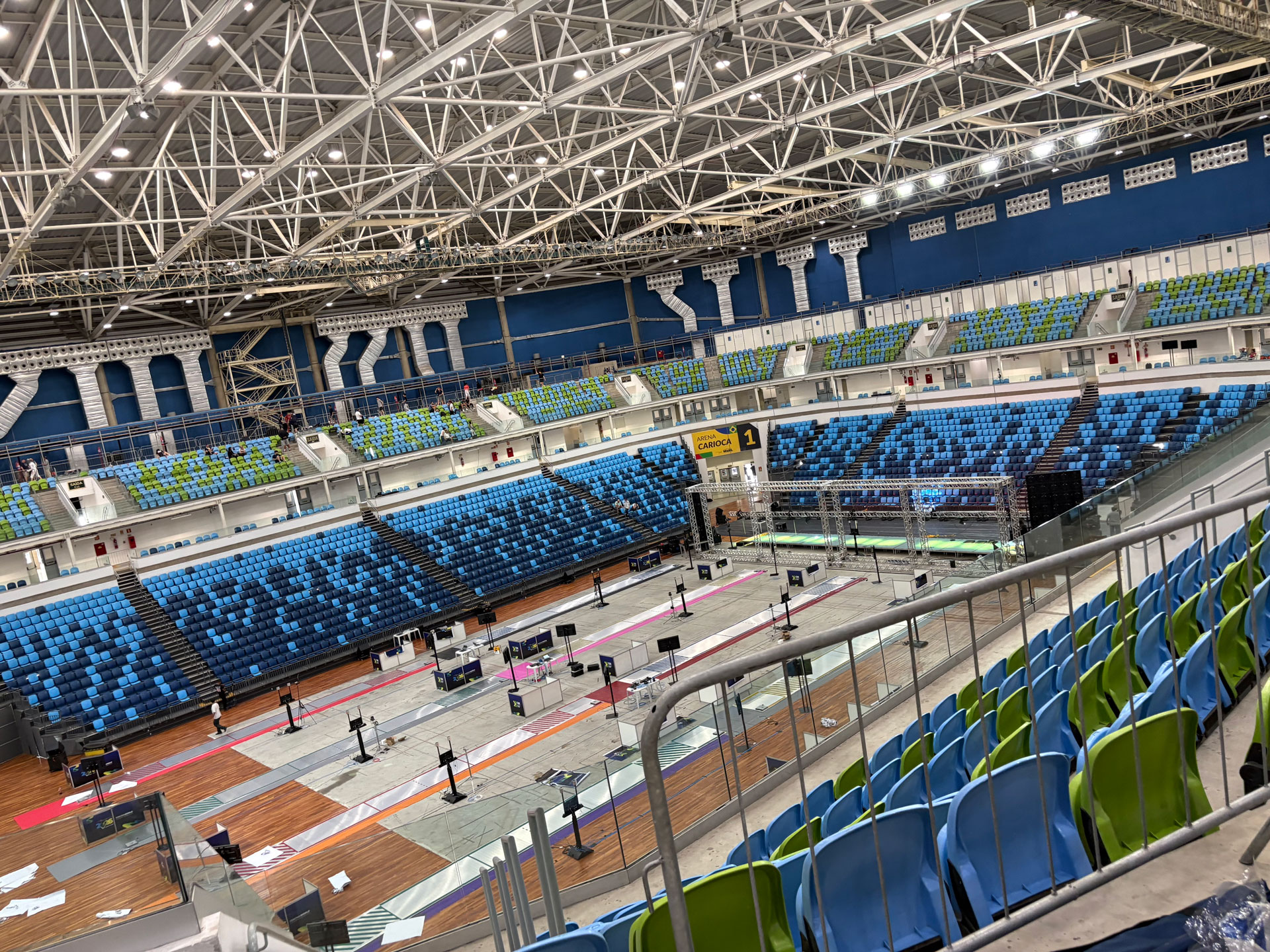
By March 31, the reality of it crashed into me. The competition arenas, part of the 2016 Rio Olympics, were as enormous as they were daunting. There were over 160 athletes in my event, every single one of them among the best in their country. I started doing the math in my head, calculating how many of them had been training full-time since they were eight or nine years old, how many of them had already competed at this level multiple times. I was exhausted from travel, but I could not sleep. My body was begging for rest, but my mind would not slow down. I kept replaying scenarios, running through my game plan, worrying about things I could not control.
I did not tell my coach. I did not tell my mom. I kept it to myself because I thought admitting I was overwhelmed would make me look weak.
That was my first mistake.
The Pool From Hell
When pool assignments were released, I knew I had drawn a brutal group. I researched every one of my opponents, studied their tendencies, and gave myself one clear instruction: go forward. No hesitation. Attack first and make them respond to me.
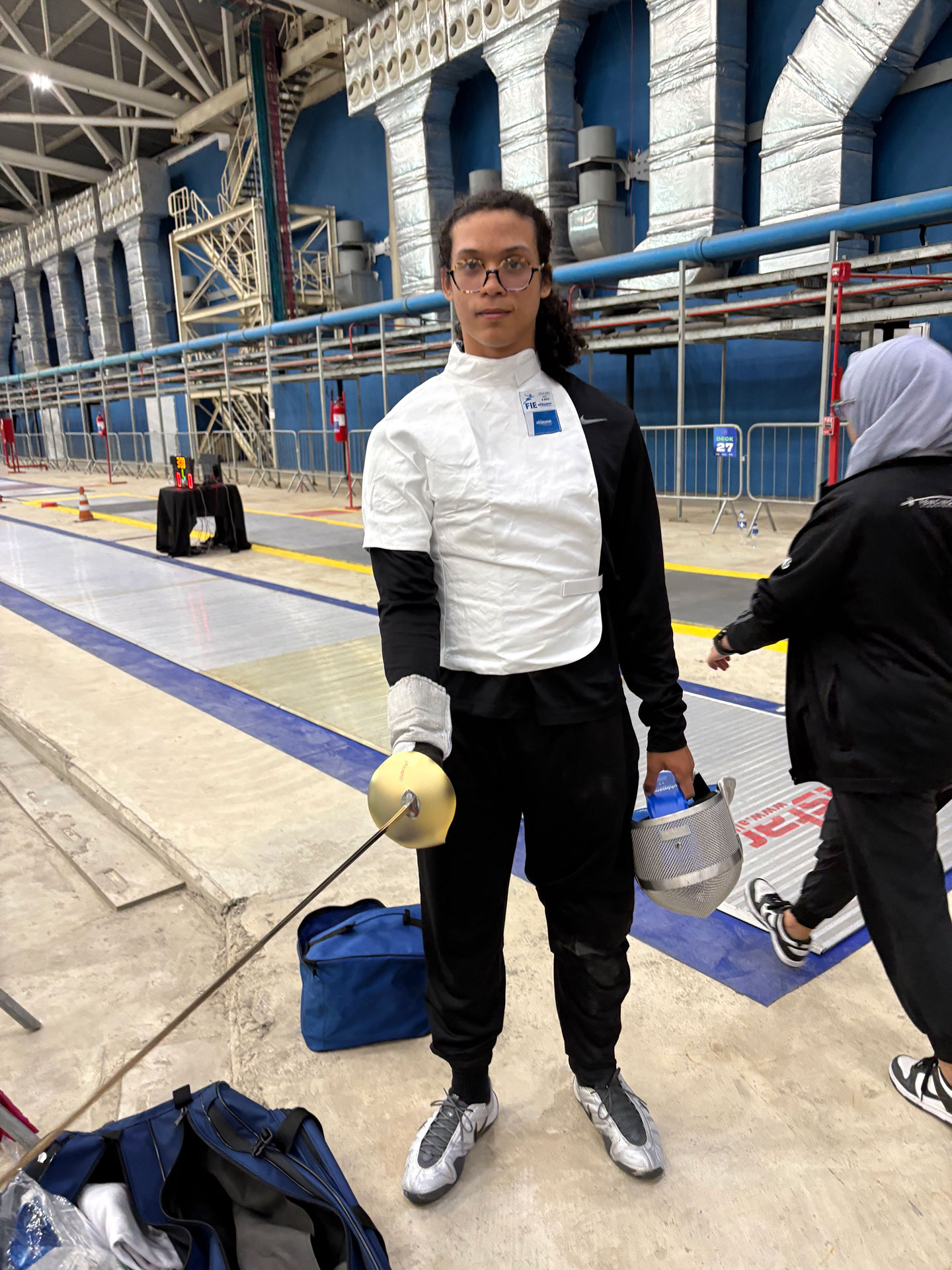
On April 1, I suited up and walked to strip 23. I remember thinking the number had to be lucky, because the story behind it was too strange to be anything else. Professor Sarah Eisor, who had been an English teacher at my school, The Loomis Chaffee School, before becoming a university professor, happened to share our first leg of the flight from Boston to Miami. We had been sitting in the same row, row 23. We later discovered as we chatted away about books, the environment and other shared interests that we also shared a connection to La Cañada Flintridge among other uncanny coincidences. She saw my strip assignment posted in the venue and sent it along with a message wishing me luck. The whole chain of serendipity felt like the universe telling me something good was coming.
It was not.
The scoring machine failed before my first bout even started. We waited 45 minutes while technicians worked on it, and during those 45 minutes, every bit of rhythm and energy I had built up just drained out of me. By the time the machine was fixed and the referee called us to the line, I was a different fencer than the one who had walked onto the strip.
Then I fenced. I lost 0–5. I lost again. And again. These were not close bouts. I was not losing because my opponents were making incredible touches. I was losing because I was not really fencing. I was reacting instead of initiating, retreating instead of advancing, second-guessing instead of trusting my training. My legs felt stuck to the strip. My arm felt heavy. My mind shut down completely.
And I started crying. Right there, in front of hundreds of people, in a venue full of the best young fencers in the world, I cried.
And, then, I cried some more.
The Moment Everything Shifted
My mom usually cannot watch me fence. She has told me that the stress of watching me compete is almost unbearable for her, so she typically finds somewhere else to be during my bouts.
But that day, she stayed. She stood behind the barrier and watched every single touch, every single loss, every moment where I was falling apart in front of her. And after every bout, no matter what the score was, she gave me a thumbs up. Not a fake smile, not a pity look. Just a thumbs up that said, I see you, and I still believe you can fight.
That changed something inside me.
In my next bout, I scored two clean touches. They were real touches, not lucky ones. I set them up, I committed to the attack, and I landed them. In the bout after that, I scored two more. For a few minutes, I felt like myself again. I was decisive, I was sharp, and I was completely present on the strip instead of drowning in my own head.
Then I lost it. I hesitated on an attack I should have committed to. I gave away priority in a moment where I knew better. I made choices that I know, in my bones, I am better than. I lost bouts that were within my reach, bouts where the outcome came down to one or two decisions that I got wrong.
And I cried again. Not because I was embarrassed this time, but because I could feel how close I was to being the fencer I know I can be, and I could not get there.
Learning the Hard Way
I finished pools with four touches. I was last. It was a miracle I made any of those touches at all feeling like my arm was holding a 50-pound dumbbell instead of my two-pound saber. I was far from where I hold myself to be. It was a humbling result, and I would be lying if I said it did not hurt. It hurts a lot.
The next day, in the cadet event, I improved. I scored nine touches. One bout I lost 4–5, a single touch away from a win against a top ranked fencer who had been competing internationally for years. Another round was within reach until the final seconds. The improvement was real, and it told me something important: even in the span of 24 hours, I was capable of adapting, learning, and getting better under pressure.
But the same core issue remained. My mind and my body were not connected when the pressure was highest. I know how to fence. I know how to set up an attack, how to read my opponent, how to control distance, and I have the speed to match. But when the stakes were real and the crowd was loud and the score was not in my favor, all of that knowledge did not translate into automatic action. At this level, that gap between knowing and doing is everything.
What Rio Taught Me
Rio made one thing absolutely clear to me. I have the ability. I have the speed, the athleticism, and the blade work to compete with the best fencers my age in the world. My coaches have told me this, and now I have seen it for myself, both in the moments where I fenced well and in the moments where I fell short.
What I do not have yet is an unconscious ability under pressure to perform as I intend to. That is the kind of muscle memory that only comes from consistent, high-level repetition in the right environment, from fencing against elite competition day after day until the right decisions stop being decisions and start being instincts.
Most of my competitors train in systems where fencing is built into every part of their daily lives. They have national training centers, full-time coaches, and teammates who push them in practice the way a world championship pushes you in competition. I do not have that yet. I have been working to build more of that structure at the club level at Loomis, and I am still pushing every day to make it happen. But I also understand something clearly now: if I want to reach my goal of fencing at the Olympics for Nigeria, I need to be in an environment where excellence in fencing is the standard and not the exception. I need to be surrounded by people who are better than me, every single day.
The People Behind Me
None of this happens without Coach Madison Fournier. She has pushed me when I wanted to coast, supported me when I was struggling, and held me accountable through every high and every low of this journey. She is the reason I believe that the work I am putting in will eventually produce the results I am chasing.
Coach Ibrahim and the Nigerian Fencing Federation have also placed their trust in me, and I do not take that lightly. They welcomed me onto the national team, guided me through my first international competition, and challenged me to raise my standard. Coach Ibrahim told me something after Rio that I will carry with me for a long time. He said the talent is there, the physical tools are there, but there is work to do. I respect that honesty more than I can express, and I am ready for that work.
What Comes Next
Because of my performance and commitment in Rio, I have been selected to represent Nigeria at the African Cup in Côte d’Ivoire in May 2026 and at the Commonwealth Championships in Lagos in August 2026. These are not just competitions to me. They are opportunities to prove that Rio was not a setback but a starting point.
I am currently ranked 579th in junior men’s saber and at the time of this ranking, I do not know if I also got a ranking as I performed better in the cadet. Before Rio, I had no world ranking at all. Zero. Now I have one and possibly two. I am grateful for the ranking. It is a big deal to me. However, I also know that the current ranking is not where I want them to end up, but itrepresent something that matters to me more than I expected: proof that showing up to the hardest stage I have ever been on, struggling, crying, and refusing to quit, actually counted for something. Rio was not the failure it felt like in the moment. It was the tournament that put me on the map.
My Takeaway
I did win in Rio, not how I thought I would, but I did. Strip 23 was indeed lucky even if I did not know it then. Professor Eisor was right.
I also cried more than once in front of people whose respect I want more than almost anything. But I also learned how deeply this sport matters to me, not as a hobby, not as an extracurricular, but as the thing I want to build my life around.
I learned that I am willing to fight even when everything is falling apart, even when the scoreboard says I should stop, even when my body and my mind feel like they are working against each other.
And I learned that I am not close to done. Not even close.
Next stop, Africa. This time, I will be ready.
← Previous: Learning Discipline Beyond Results | Next: From Abidjan to Zeta →
